
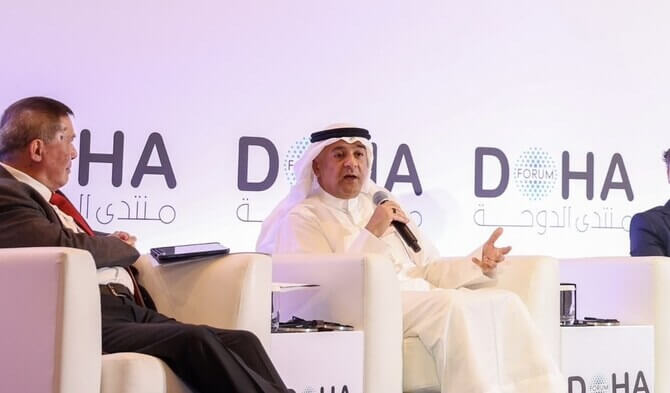
Jassim Mohammed Al-Budaiwi, the Secretary-General of the Gulf Cooperation Council (GCC), has reiterated that the Gulf nations are steadfast in their commitment to fostering dialogue and diplomacy, despite the intensifying competition between the United States and China. According to Al-Budaiwi, the GCC’s pivotal role in regional affairs remains unchanged as it continues to serve as a bridge for peace and cooperation in the Arab Gulf.
Al-Budaiwi’s statements were made during the 22nd edition of the Doha Forum in Qatar, where he participated in a session discussing the growing rivalry between the US and China, and its potential impact on the future of security cooperation in the Middle East. The forum served as a platform for regional and global leaders to discuss the shifting dynamics in international relations and their effects on Middle Eastern security.
Al-Budaiwi emphasized that despite the intense competition between the two superpowers, the Gulf Cooperation Council nations, including Saudi Arabia, are committed to fostering multilateralism and building balanced relationships with both the United States and China. The Secretary-General underscored the importance of maintaining strong diplomatic ties with both global powers to ensure a stable and prosperous future for the Gulf region, as well as to contribute to global peace and security.
He further highlighted that GCC countries have long-standing relations with the United States, which have been primarily focused on security, economic cooperation, and mutual defense agreements. However, the Gulf nations have also actively engaged with China, signing various agreements aimed at strengthening trade, investment, and technology exchange. The GCC’s vision includes creating a sustainable and diversified economy, and collaboration with China is seen as a crucial step in achieving this goal.
Al-Budaiwi pointed out that cooperation with both China and the US is essential for addressing pressing challenges such as climate change, technological innovation, and the need for economic diversification. These issues are critical for the future stability and prosperity of the Gulf region, as well as for ensuring global peace and sustainable development.
In conclusion, Al-Budaiwi’s remarks emphasize the importance of diplomacy and dialogue in a region that has often been at the crossroads of international power struggles. Despite the fierce rivalry between the United States and China, the GCC’s role as a neutral party committed to peace and cooperation remains vital to the region’s security and economic future.


