
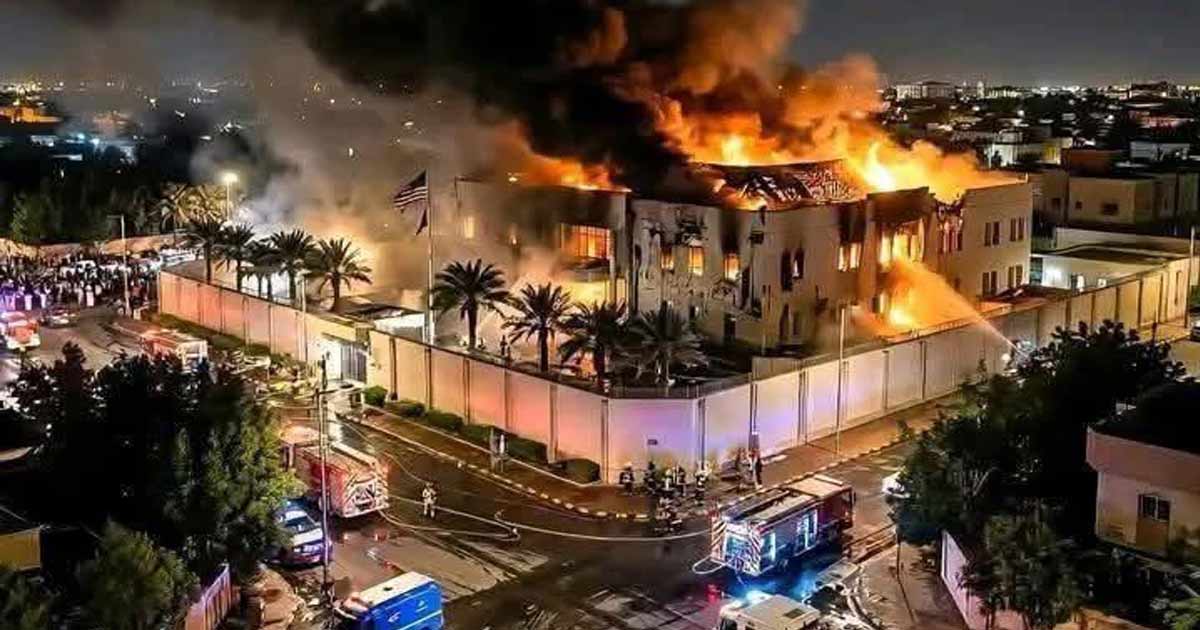
For the first time since the escalation of the US–Israeli–Iranian conflict, Riyadh, which had largely been spared from attacks hitting other Gulf cities like Dubai and Manama, came under a drone strike targeting its highly secured diplomatic district.
Most embassies in Riyadh, including the United States embassy, are located in a fortified, isolated area designed primarily to counter suicide bombings rather than modern drone threats, according to The New York Times.
Eight Drones Intercepted Near Riyadh
On the night of Monday to Tuesday, General Turki Al-Malki, the official spokesperson for the Saudi Ministry of Defense, announced on X that eight drones had been “intercepted and destroyed” near Riyadh and the neighboring city of Al-Kharj. Witnesses reported seeing smoke rising above the US embassy, and subsequent explosions were heard in central Riyadh. One resident described to AFP hearing a “loud detonation” and feeling their house shake.
US Embassy Sustains Limited Damage
The US diplomatic mission in Riyadh was struck by two drones, resulting in a “limited fire and minor damage” to the building, the Saudi Defense Ministry confirmed. In response, the embassy announced it would close on Tuesday, canceling all routine and emergency consular services. Americans were urged to avoid the embassy “until further notice due to an attack on the facilities.”
Earlier, US Secretary of State Marco Rubio had already advised Americans on X to leave Middle Eastern countries, including Saudi Arabia, immediately using available commercial transportation due to serious security risks. When asked about a potential US response, former President Donald Trump commented, “You will find out soon.”
Riyadh Condemns “Unjustified” Attack
The Saudi Ministry of Foreign Affairs issued a statement condemning the Iranian attacks on embassies, reaffirming Riyadh’s full right to take all necessary measures to protect its security, including deterrent actions against any aggression.
The attack comes amid ongoing Iranian missile strikes targeting Saudi Arabia and other Gulf countries since the start of the US–Israeli military operation against Iran on February 28. Previous missiles aimed at King Khalid International Airport and Prince Sultan Air Base, Ras Tanura Refinery, operated by Saudi Aramco, had to halt certain operations following a fire caused by an attack. This disruption significantly limits the kingdom’s oil exports, affecting one of the world’s major oil producers.
The drone strikes mark a new escalation in the Gulf, showing that even the most fortified areas, including diplomatic zones, are now vulnerable to modern aerial threats.


